Travel Bag
Designing a travel bag for international flights using sewing techniques
Physical Prototyping
Sewing
October 10 2023 – October 23 2023
Individual Project for HCDE 451
Context
This is a prototyping project for creating a soft good, and I chose to design a travel bag specifically for people who regularly take international flights. The bag should be for someone to fit in their passport, flight ticket, cell phone, wallet, keys, and a pen, which are the typical items that one is likely to carry on to an airplane.
Design
Bag Dimensions
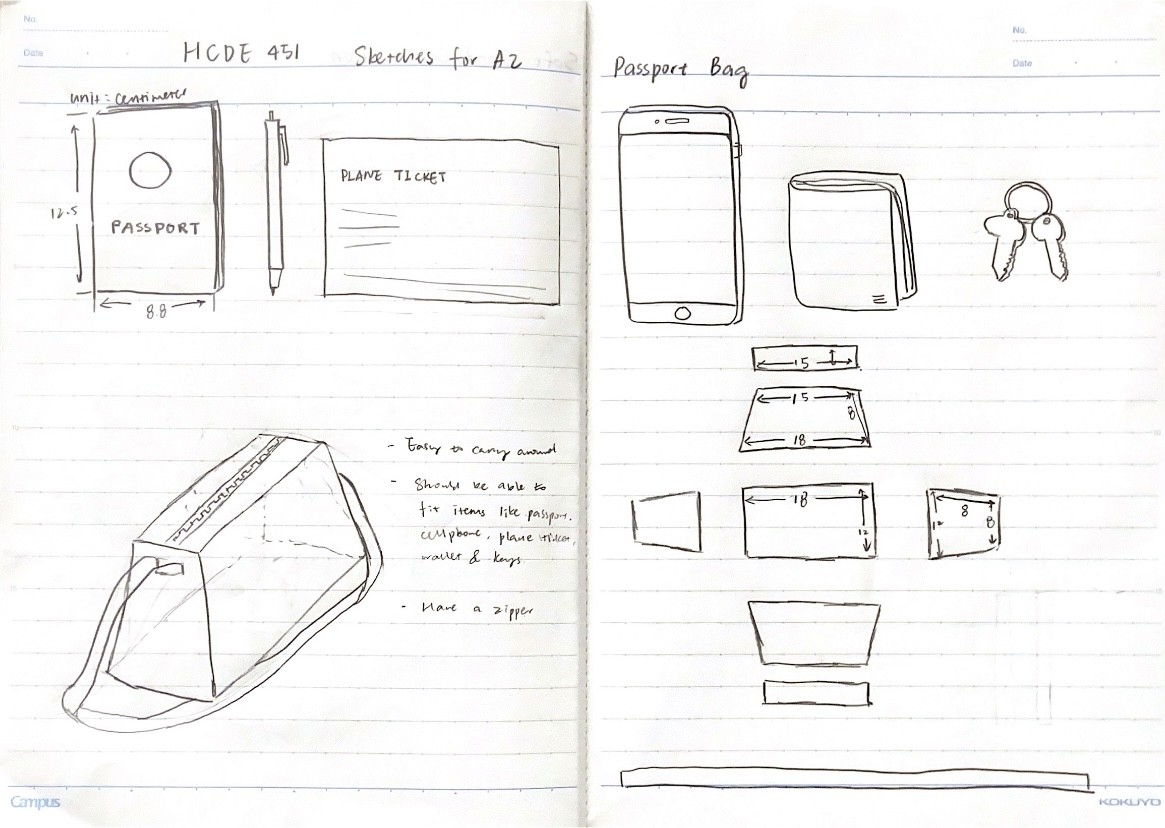
Since the bag is designed for people to put passport and other important personal belongings, it is important for the dimension of the bag to be able to fit in those personal belongings. At the same time, the size of the travel bag should be as small as possible, because smaller volume allows the user to carry around the bag easily. So I tried to design a bag that is small in size but still able to carry several items.
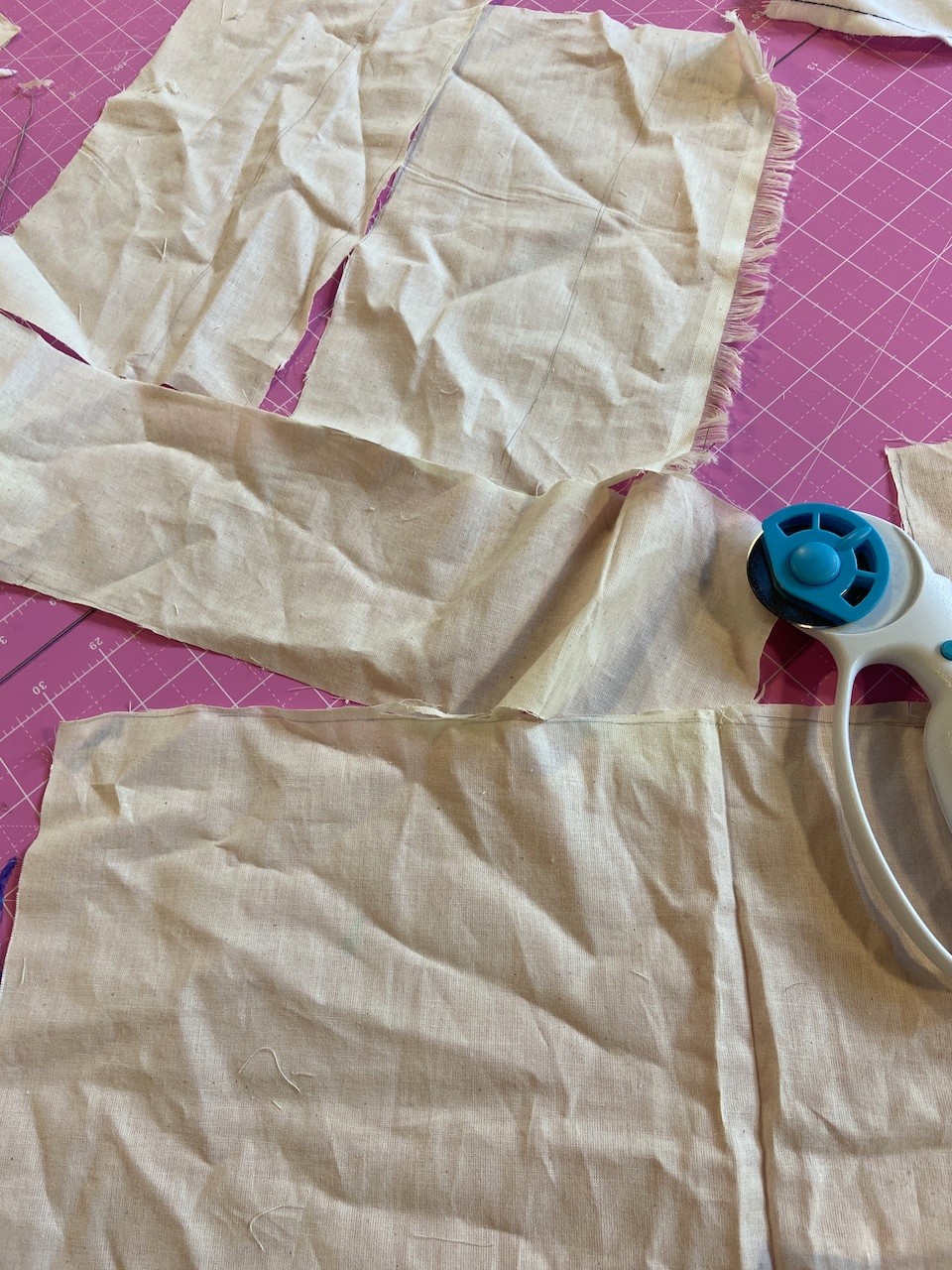
Cutting muslin fabric
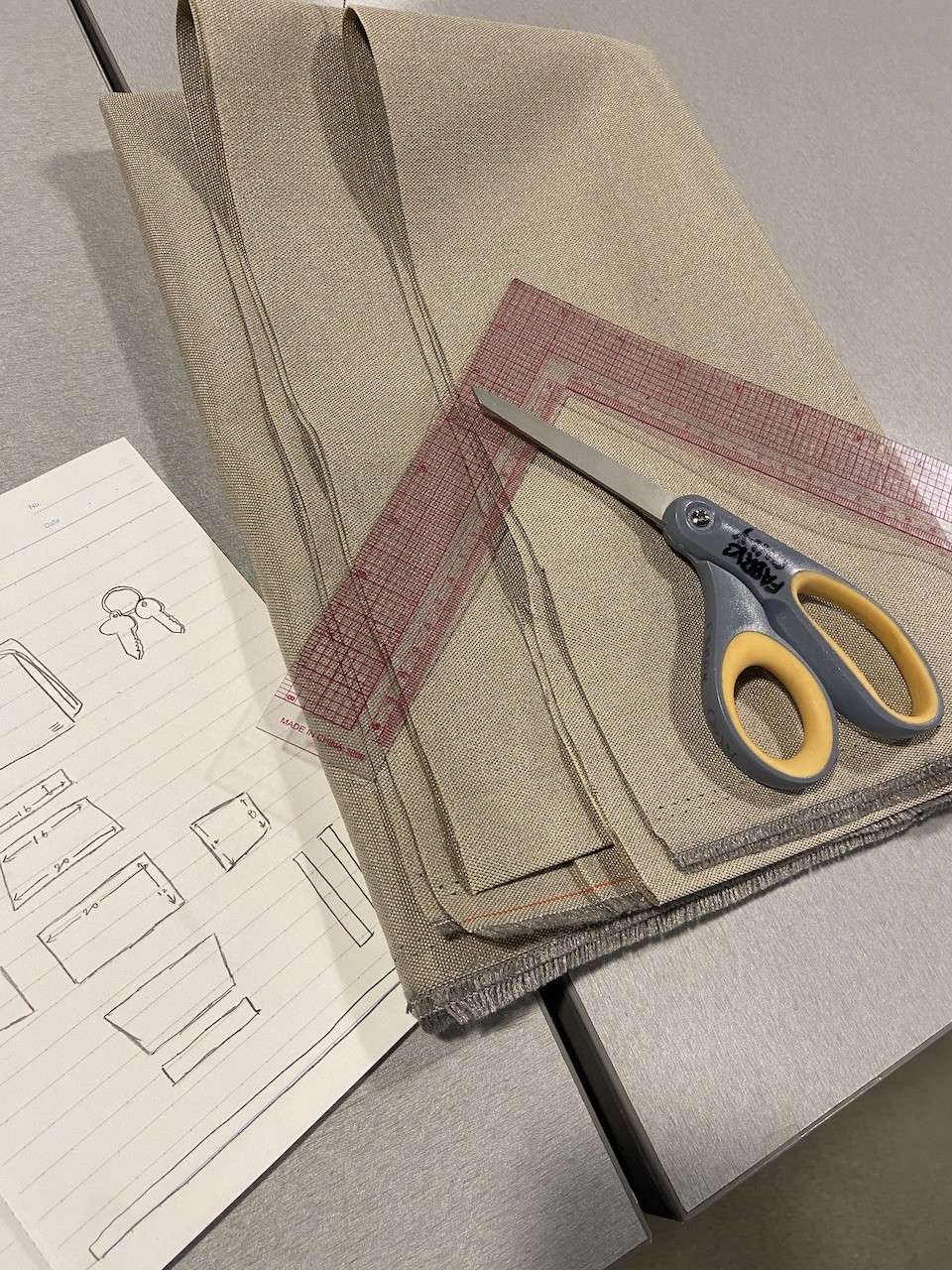
Designing for dimensions
Shoulder Strap vs. Bag Handles
Whether the travel bag should have a shoulder strap or handles on it was a design decision that I had hard time making. A shoulder strap might be helpful to carry around the bag, but I wondered if it is necessary to put on a shoulder strap because users will potentially be seating on an airplane for a decent amount of time instead of moving around, so using handle might be a more pragmatic approach. That’s why I decided to pursue the handle idea in my first iteration of the prototype.
Zipper
A zipper affords users’ needs to be able to open and close the bag smoothly. Also, the travel bag must have a zipper because it allows users to secure their important personal belongings into the bag.
Prototype
Iteration #1
The first iteration is designated to test out how to work with a sewing machine and how to put pieces of fabrics together. I used muslin fabric, thread, and sewing machine to create this prototype. Although my attempt to use 3 pieces of fabrics to make the bag worked, the edges of the side of the bag is not as rigid as I would like them to be. One mistake that I made was that I sewed the right side of one piece of fabric with the wrong side of another piece, where I was supposed to keep the right side of the materials inside and sew the wrong side together. It caused the stitches to be visible from the outside of the bag. Another problem with this iteration was that the length of the shoulder strap was way too short and it almost felt like a handle.
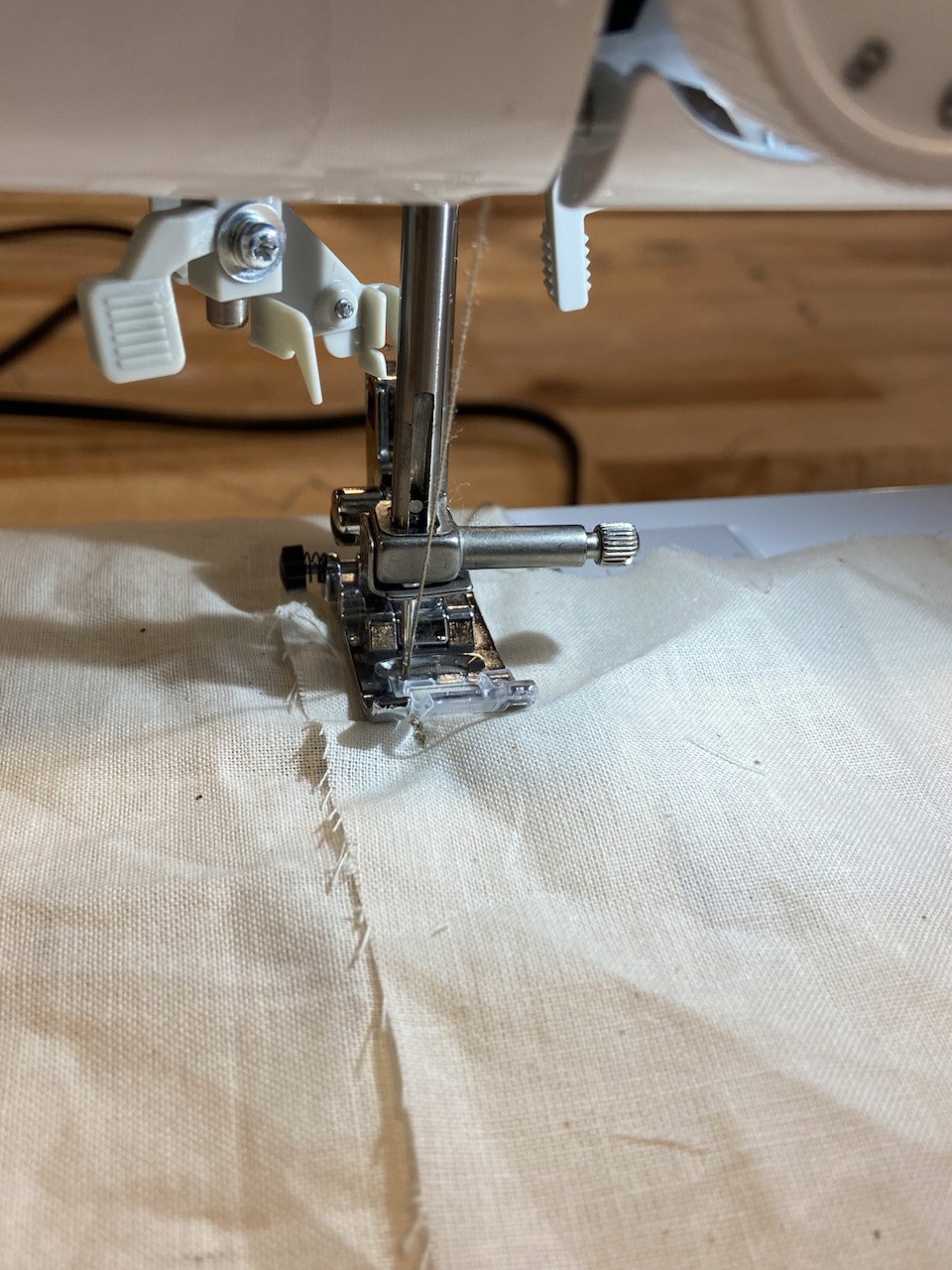
Mistakenly sewed the right side of one piece of fabric with the wrong side of the other
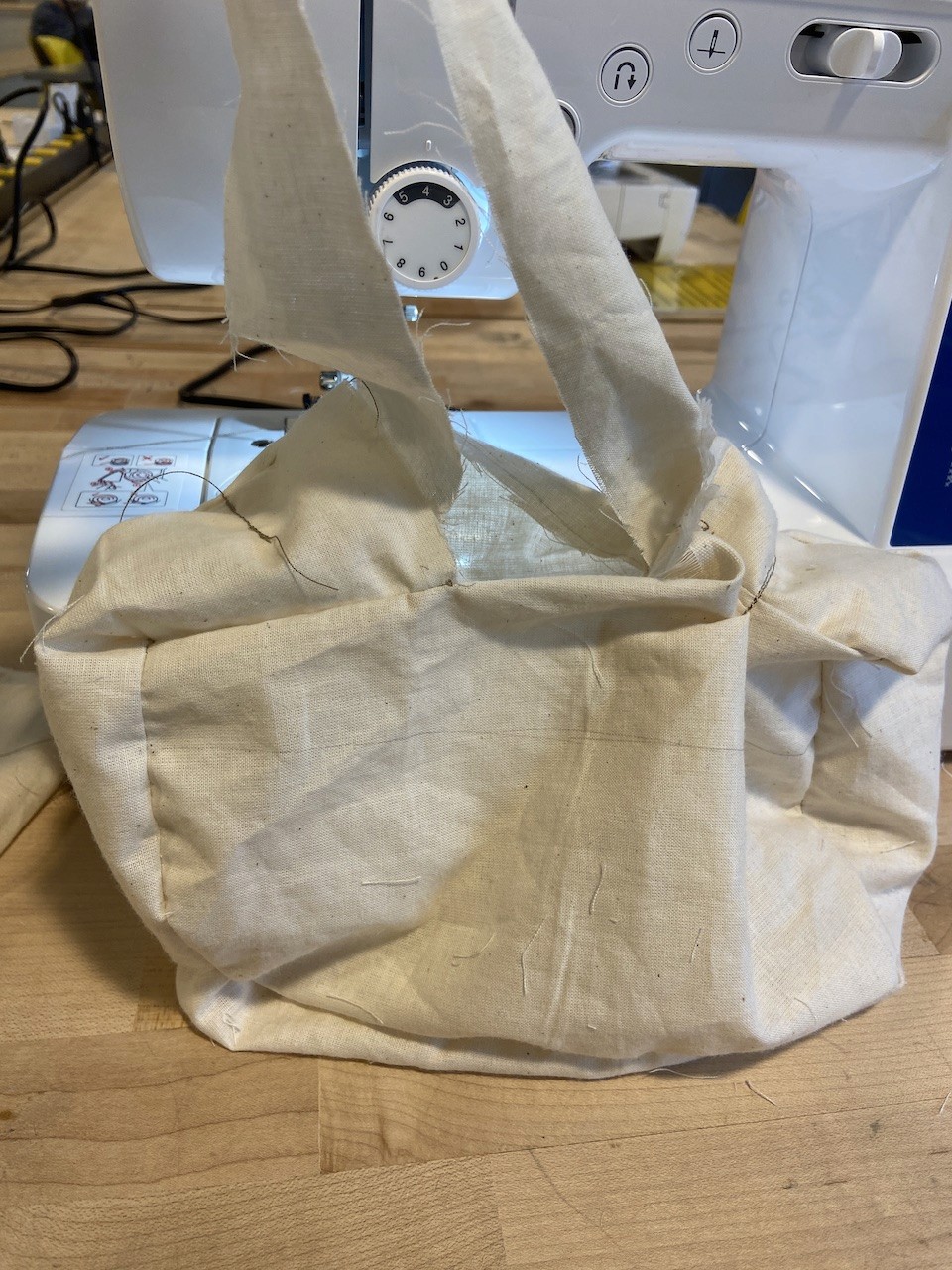
The first iteration of the bag prototype
Iteration #2
I used sola solarium linen, strap, thread, sewing machine to construct my second iteration of the bag. The construction material was changed from muslin to sola solarium linen because it is a sturdier and thicker material that is great for keeping the shape of a bag.
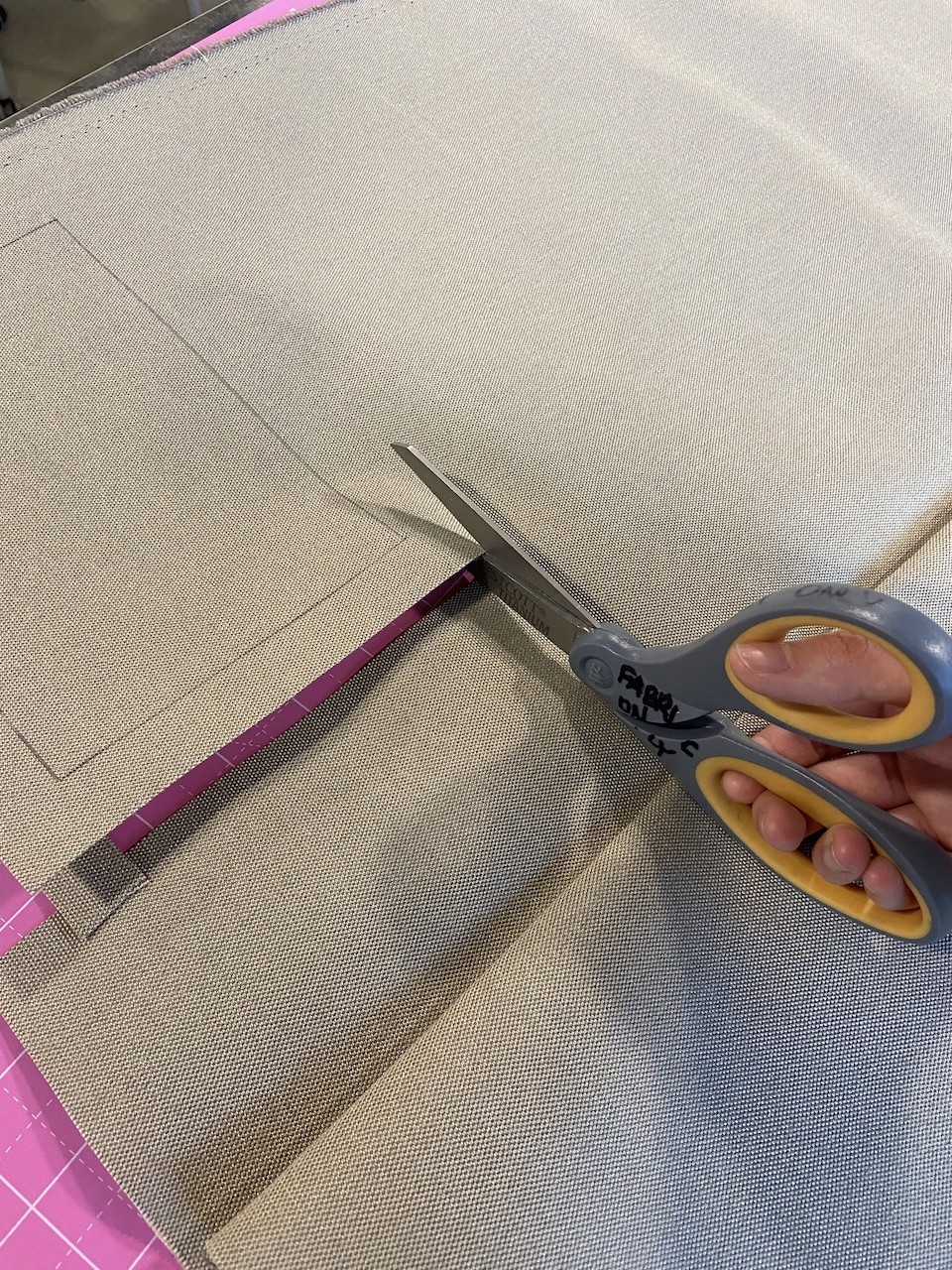
Cutting sola solarium linen fabric
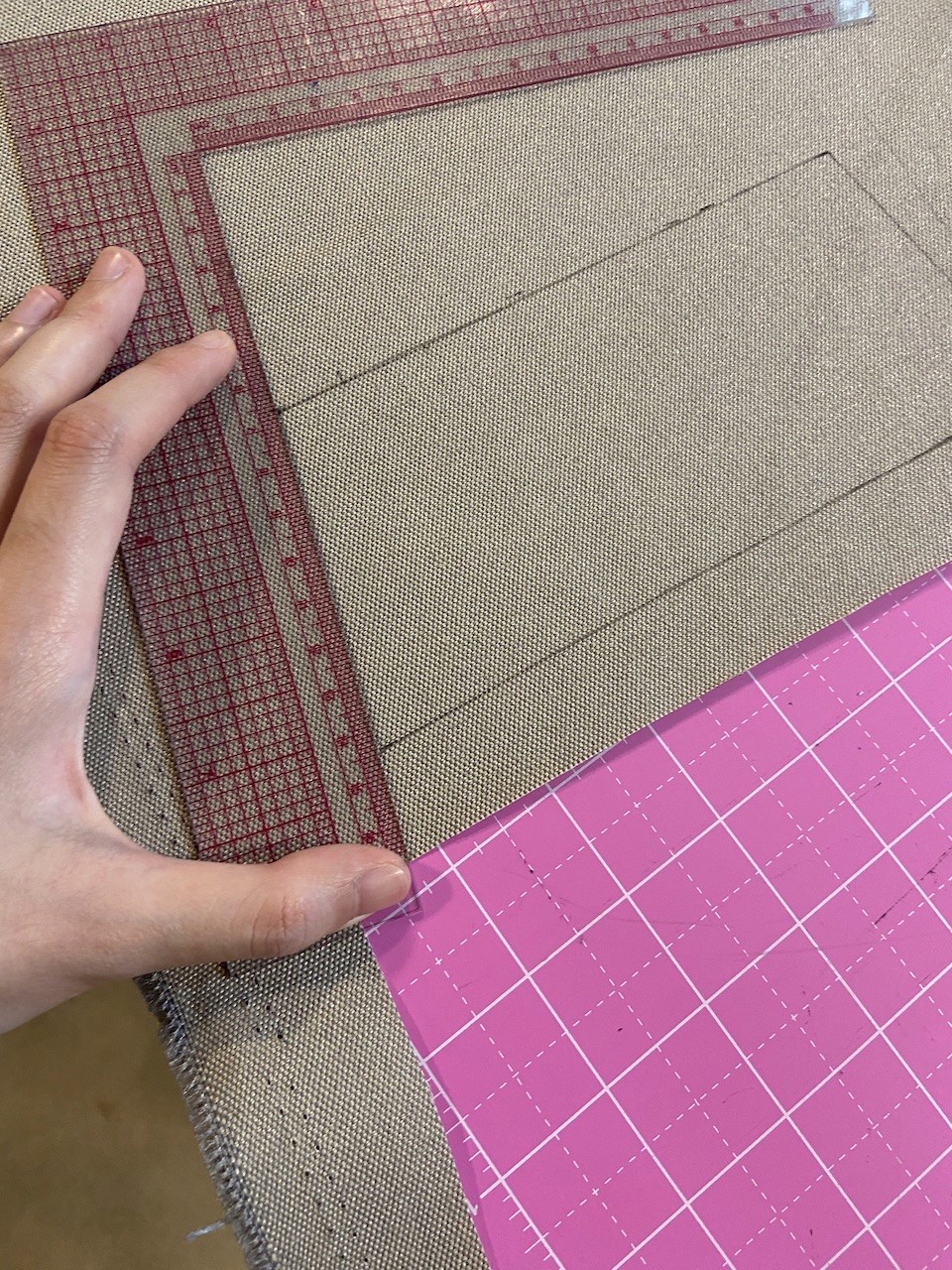
Labeling dimension
Sewing Tension
Since sola solarium linen is much thicker than muslin, I used pieces of fabrics to test the effect of different sewing tensions. It turned out that a sewing tension of 4 is too tight and wrinkled the materials, so I increased the tension to 5 and it worked well.
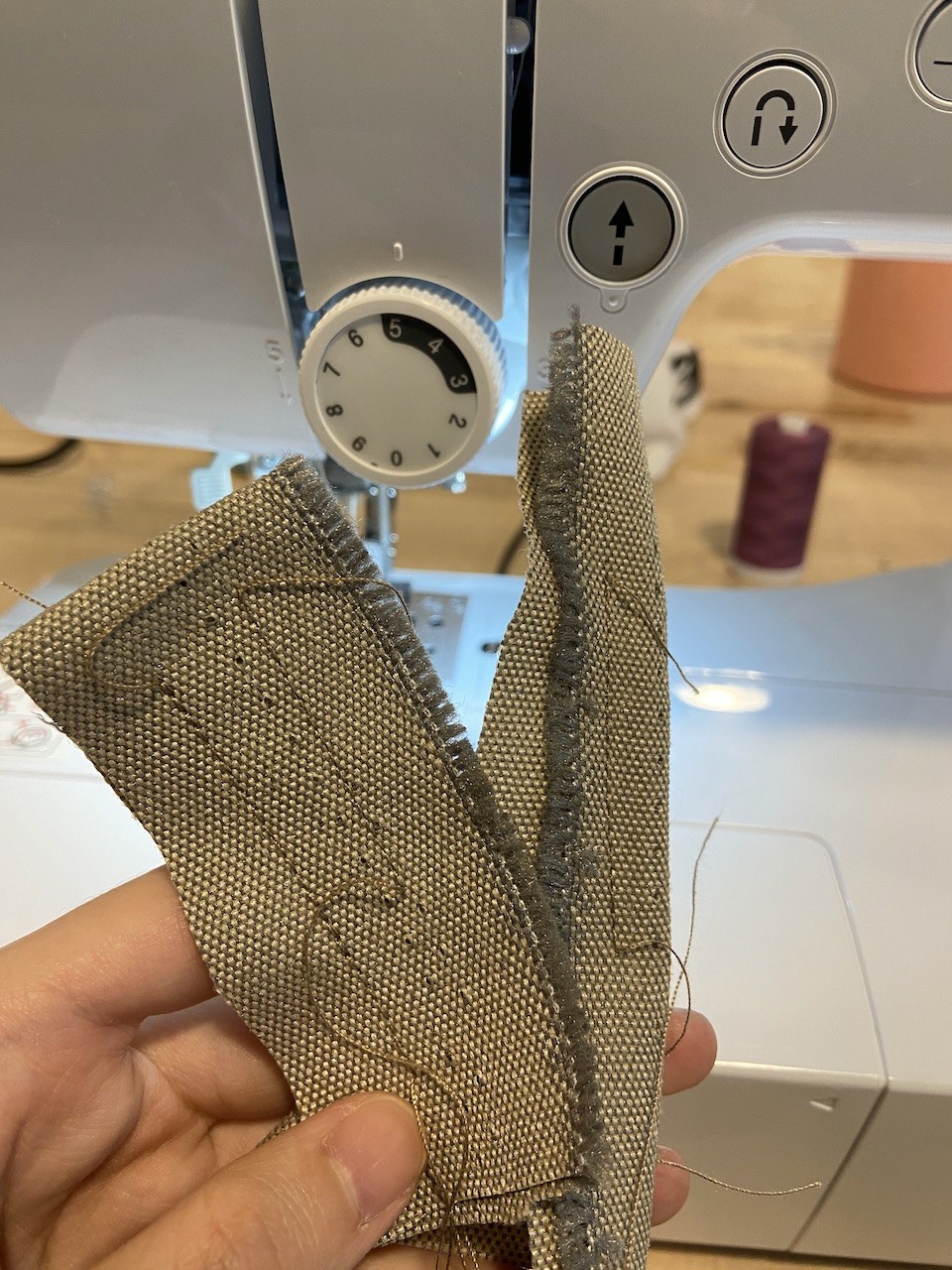
Testing the material with different sewing tensions
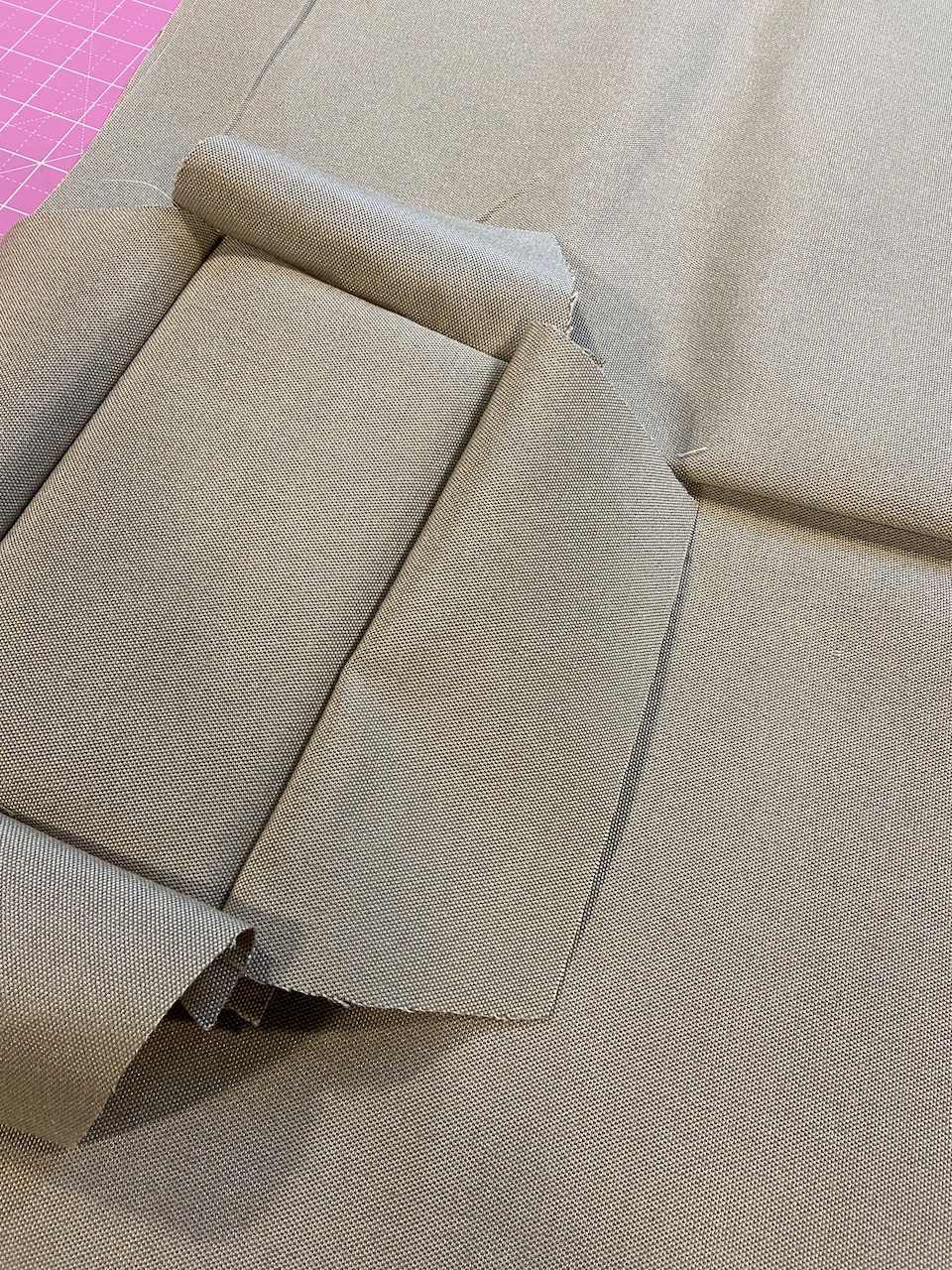
A sewing tension of 5 worked well
Shoulder Strap
I decided to make a relatively wide strap because a wide strap has less pressure on one’s shoulder. I also wanted to allow users to quickly reach stuff in the bag, so the length of the shoulder strap was designed to make the bag just beside one’s body.
Assembling Pieces Together
Learned from my first iteration, I realized that if I wanted to make the bag stand up on its own, I would have to use 3 pieces of fabric to form a solid corner. One mistake that I made was that I sewed the shoulder strap as my last step, after the bag and zipper has been sewn together. The problem with sewing the strap at the end was that the materials of the bag and strap overlaps and became very thick and difficult to squeeze under the footer.
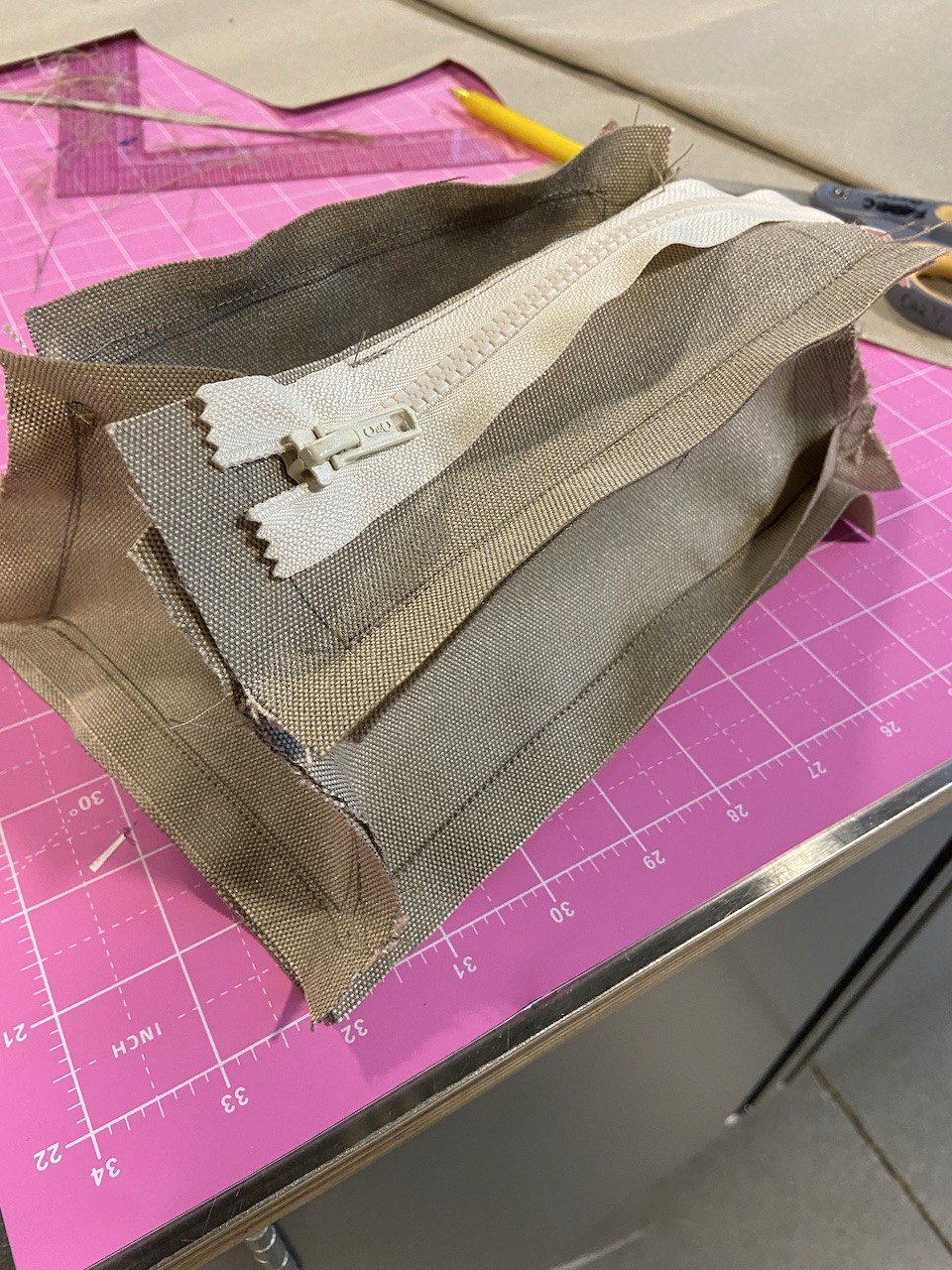
Sewing details
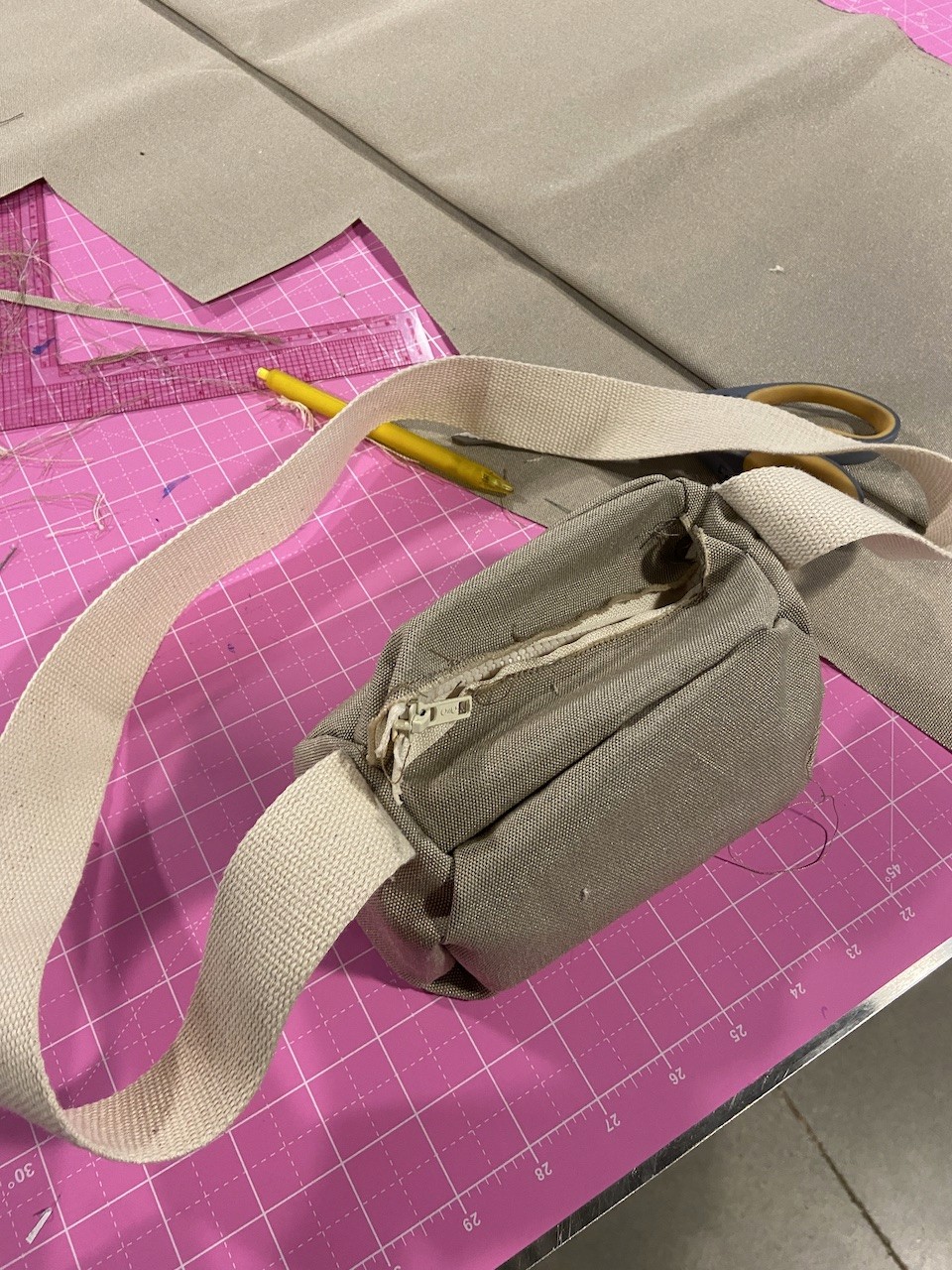
Finished Prototype
Usability testing
Video Demo of User Test
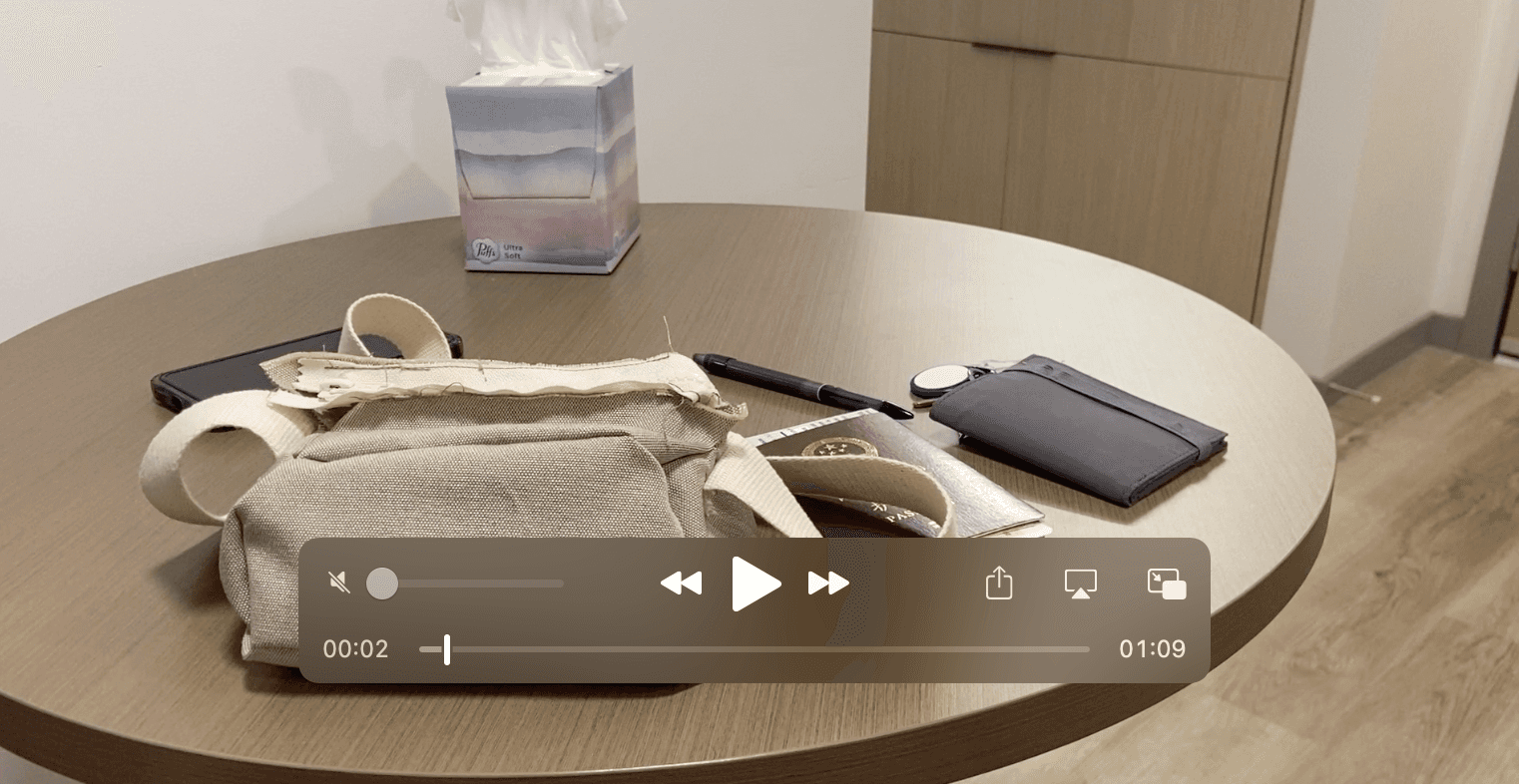
Video of a Quick User Test
Feedback from Critique
What worked well?
Length of the shoulder strap: the length is just right, not too long, not too short.
Material: The sola solarium linen feels sturdy and works well for travel.
Visual aesthetics: The natural colors are relaxing and easy to go with outfits.
What could be improved?
Zipper: One side of the zipper is not well hidden, and it might be improved by cutting out some extra materials on the zipper and sew it together with the body of the bag.
Shoulder strap: The shoulder strap was hard to sew as the final step of building this prototype. In my future sewing design, I should carefully plan out the order of assembling fabrics.
Dimension: Increase the dimension of bag so that it’s easier to fit in passport and phone.
Analysis
The design is usable because users are able to put passport and phone into the bag, open and close the bag with the zipper, and carry the bag with the shoulder strap. The design is also desirable, as the testers said that the natural colors are calming, and they might actually wear it because the colors are easy to go with outfits. In terms of feasibility of the design, it is possible to make this kind of bag with fabrics, threads, and sewing machine.
Reflection
This project is my first time using sewing machines, and it’s challenging to learn and make a bag out of a prototyping technique that is new to me. The sewing experience was really interesting and opens up another prototyping option for me, and I hope that I’ll get more opportunities to practice and apply the technique in my future design.
© 2024 Lushan Wang Portfolio. All rights reserved.